
Employers face rising health care costs, uneven outcomes, and benefit plans that often react too late. Understanding how does precision medicine work for employers helps shift that pattern toward prevention, smarter health plans, and measurable return on investment.
This article explains the model, the science behind it, and why employers now treat precision medicine as a core employee benefit strategy rather than a fringe concept.
How Does Precision Medicine Work for Employers
At its core, how does precision medicine work for employers comes down to using individual health data to guide better decisions across an entire workforce. Instead of waiting for illness to appear, precision medicine relies on advanced diagnostics, biomarker analysis, and clinical data to identify health risks early. Employers do not practice medicine themselves, but they sponsor health plans and employee benefit structures that allow this data-driven care to happen.
When employers integrate precision medicine into their health plans, they support targeted prevention rather than reactive treatment. This approach reduces unnecessary claims, improves outcomes, and aligns health care spending with actual employee needs. That difference explains why how does precision medicine work for employers now appears in long-term benefits planning discussions across Arizona-based organizations.
The Science Behind Precision Health in the Workplace
Precision medicine uses genetic data, metabolic markers, and lifestyle indicators to understand how health risks differ from one person to another. In a workplace setting, this science supports population-level insights without sacrificing individual relevance. Research from the National Institutes of Health explains precision medicine as care that accounts for genes, environment, and behavior rather than averages alone.
Traditional health care relies on standardized protocols. Precision medicine challenges that structure by matching prevention and care strategies to biological data. Employers benefit because health plans become more efficient, targeted, and predictive rather than broad and reactive.
| Care Model | Traditional Health Care | Precision Medicine |
| Approach | Treat after diagnosis | Prevent before escalation |
| Data Use | Basic clinical history | Advanced biomarkers and analytics |
| Employer Impact | Rising claims | Controlled health care costs |
This scientific foundation supports the broader discussion of how does precision medicine work for employers by grounding it in evidence rather than theory.
What Employers Actually Gain From Precision Care
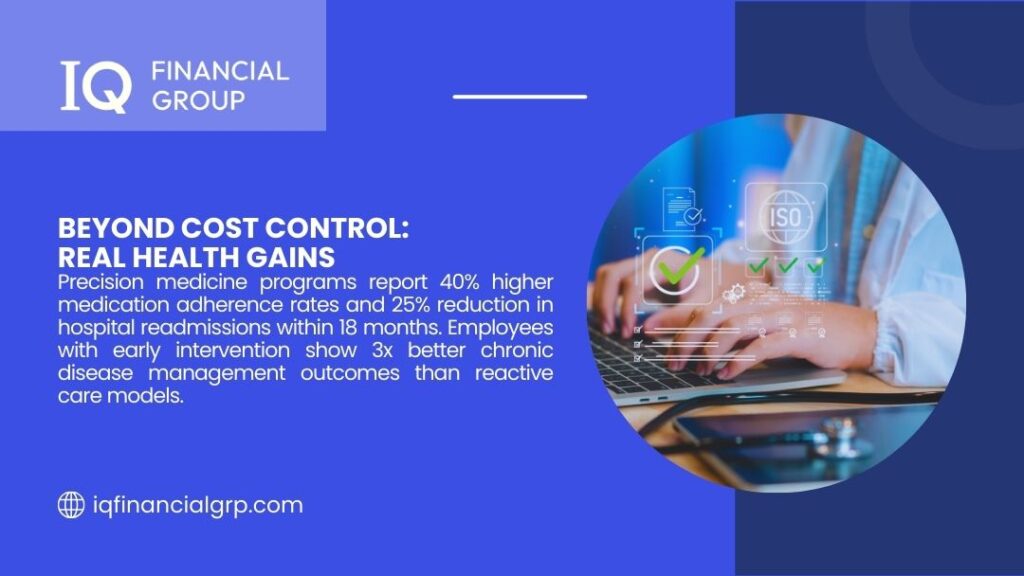
Employers care less about theory and more about outcomes. Precision medicine delivers measurable value across productivity, engagement, and cost control. Chronic health conditions account for a significant share of high health care spending, particularly when care becomes reactive rather than planned. Programs that focus on early identification and more targeted, ongoing management are often associated with better use of health services and lower costs tied to complex, long-term conditions.
For employers, how does precision medicine work for employers translates into fewer emergency interventions, steadier premiums, and a healthier workforce. Employees gain confidence in health plans that feel personal rather than generic. Employers gain predictability in budgeting and long-term planning.
Precision medicine also strengthens employee benefit design. Health plans that focus on prevention rather than delayed treatment support retention, recruitment, and overall workforce stability.
Precision Medicine and Health Plan Strategy for Companies
Precision medicine does not replace insurance. It enhances how health plans function. Employers integrate this model through data-driven wellness strategies, advanced screening access, and targeted care pathways. The result is a smarter benefits framework that aligns coverage with prevention.
| Employer Objective | Precision Medicine Impact |
| Cost control | Reduced high-claim events |
| Workforce health | Early risk identification |
| Plan efficiency | Better use of health care resources |
This strategic alignment fits naturally within modern group health insurance structures that prioritize sustainability. Employers who understand how does precision medicine work for employers treat health plans as investments rather than fixed expenses.
How Precision Approaches Reduce Health Care Costs
Health care costs rise fastest when care begins late. Precision medicine reverses that pattern. Research shows that targeted clinical interventions, such as improved prescribing systems, medication reconciliation, and coordinated case management, are associated with reductions in medication errors and emergency and unplanned care in certain settings, which in turn may help limit unnecessary costs in health care delivery.
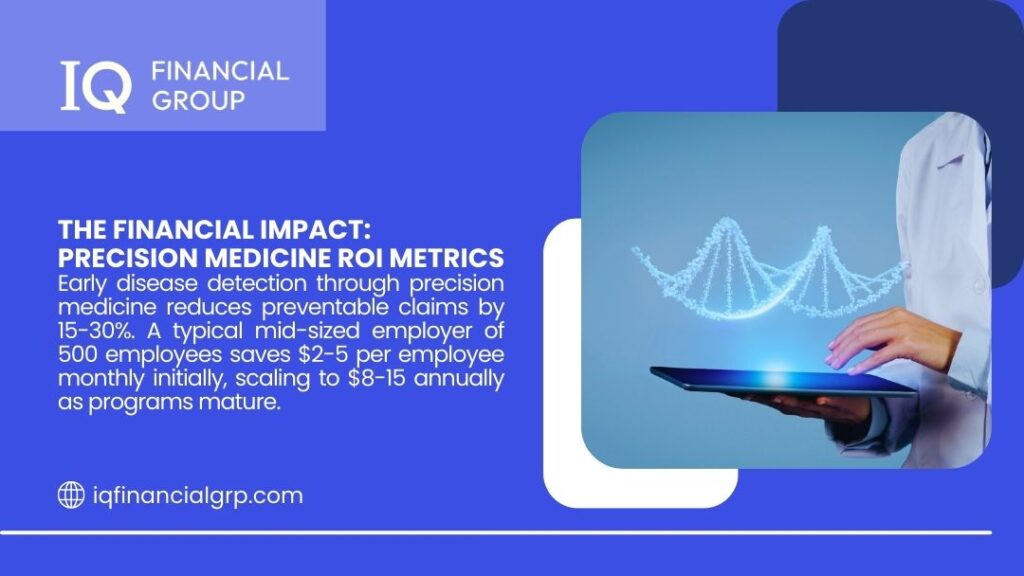
Preventative diagnostics identify risk factors before they escalate into claims that drive premiums upward. This shift explains why employers explore the ROI of precision medicine for employees as part of long-term benefits planning. Precision medicine does not promise instant savings, but it delivers steady cost stabilization through smarter care pathways.
Understanding how does precision medicine work for employers requires recognizing that prevention costs far less than delayed treatment.
Implementing Precision Medicine Into Employee Benefits
Employers implement precision medicine by partnering with health plan advisors who understand both data and compliance. Screening programs, preventative analytics, and personalized care coordination become part of the employee benefit structure rather than add-ons.
The employers often layer these strategies into existing plans rather than replacing coverage. An example of personalized wellness insurance programs for employees illustrates how preventative models integrate smoothly with standard benefits. This approach avoids disruption while improving outcomes. Precision medicine also complements traditional coverage questions that employees ask, such as what health insurance covers and how benefits respond to specialized care needs. Employers who clarify coverage and prevention together see stronger engagement and trust.
What This Means for Your Workforce in Arizona and Beyond
Arizona employers face unique challenges tied to workforce diversity, rising medical costs, and competitive hiring markets. Precision medicine offers a practical path forward by aligning health care with prevention rather than reaction. Advisors who specialize in insurance broker services in Arizona often emphasize that precision-driven plans support healthier employees and more predictable budgets.
Employers that already evaluate personalized medicine benefits for employees gain a strategic advantage. They position their health plans as forward-looking without sacrificing compliance or affordability. Understanding how does precision medicine work for employers helps decision-makers move from short-term fixes to sustainable health care strategies.
Why This Model Continues to Gain Traction
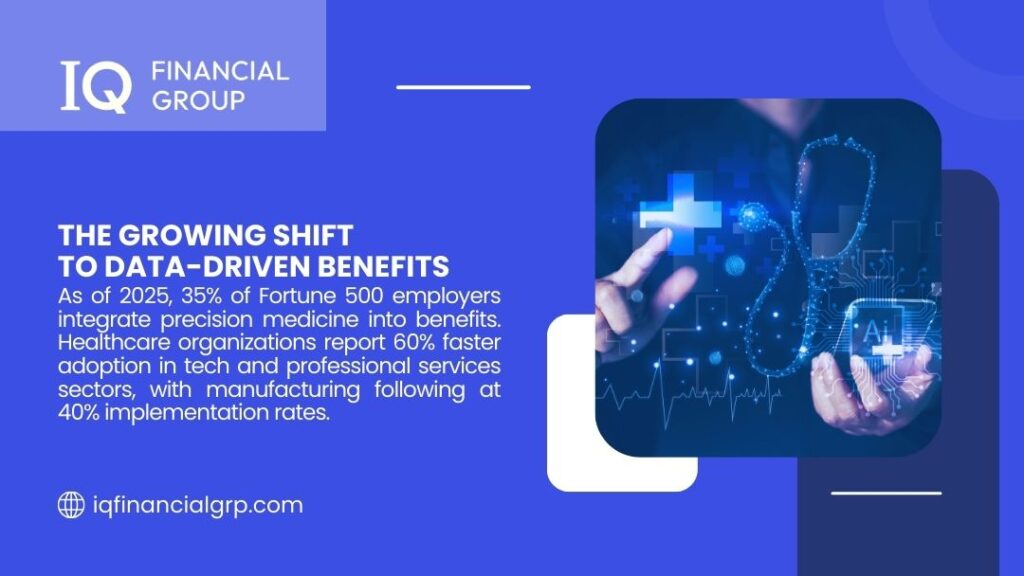
Precision medicine reshapes how employers think about health care responsibility. It replaces guesswork with data, reaction with prevention, and uncertainty with measurable outcomes. Employers who adopt this model early often report stronger engagement and steadier costs.
Organizations exploring the future of personalized medicine for employees see precision medicine as a cornerstone rather than a trend. When employers understand how does precision medicine work for employers, they gain clarity, control, and confidence in their benefit decisions. For employers ready to evaluate this approach, speaking with experienced advisors who understand both health plans and preventative strategies provides the next logical step. Precision medicine does not change the goal of employee benefits. It changes how effectively that goal becomes reality.
