
AI and personalized medicine in employee health plans are fundamentally reshaping how modern employers manage workforce wellness and rising costs. Rather than simply reacting to expensive medical claims after they hit the books, forward-thinking businesses are leveraging data analytics, sophisticated AI tools, and preventative health management strategies designed to identify risks before serious medical conditions develop. This shift aims to improve patient outcomes, curb spiraling expenses, and bolster overall productivity.
In this guide, we’ll explore how these systems function, why they are becoming an employer staple, and how they mesh with traditional health coverage while supporting emerging employer-sponsored personalized medicine programs.
AI and Personalized Medicine in Employee Health Plans: What Employers Should Understand First
Integrating AI and personalized medicine into employee health plans marks a departure from the one-size-fits-all benefits of the past. Traditional models typically rely on generalized care benchmarks based on population averages. Conversely, modern AI systems sift through medical histories, behavioral trends, and real-time health metrics to facilitate truly individualized care and early preventative intervention pathways.
The urgency for this shift is clear: healthcare costs in the U.S. are climbing relentlessly. Data from the Centers for Medicare & Medicaid Services suggests that national healthcare spending is on track to grow by roughly 5.4% every year through 2031.
Employers now view AI not just as a buzzword, but as a practical engine for interpreting dense medical data. By turning that data into actionable insights, personalized medicine allows preventative treatments and targeted wellness strategies that help reduce long-term healthcare risks and workforce absenteeism.
Why Personalized Medicine Differs From Traditional Plan Customization
Standard plan customization usually involves tweaking deductibles, changing network tiers, or adding a few supplemental perks. Personalized medicine goes much deeper, tailoring clinical care to an employee’s unique biological markers and risk factors. Essentially, employers are moving away from seeing health plans as mere reimbursement vehicles and toward seeing them as intelligent healthcare ecosystems that integrate preventative clinical testing, biometric analysis, and physician-directed care planning.
How Generative AI Supports Real-Time Healthcare Decisions
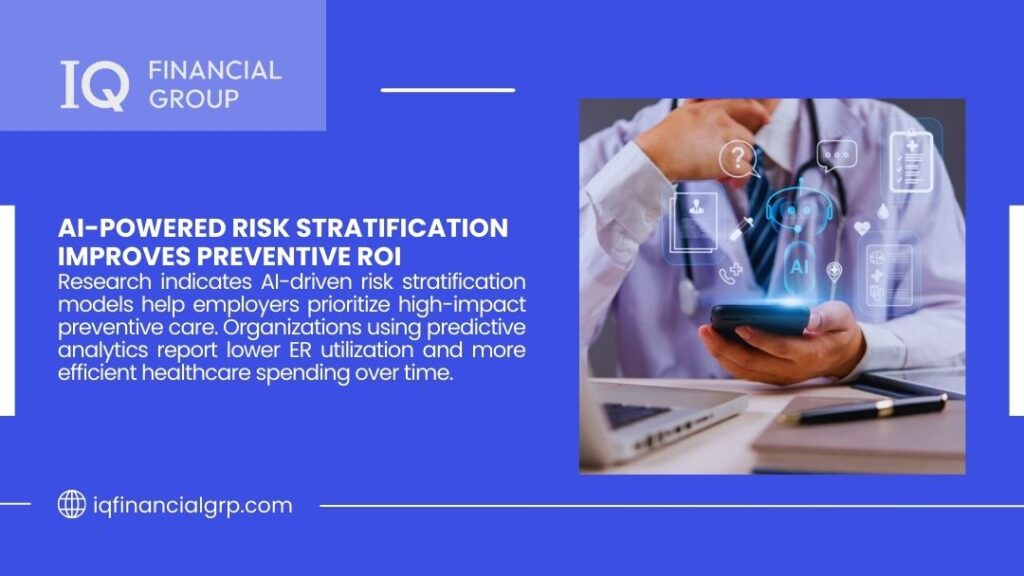
Generative AI and machine learning can process massive datasets at speeds no human analyst could match. These platforms identify early health risk indicators and behavioral patterns that support preventative care planning, medication optimization, and treatment adherence. By deploying these systems, employers can facilitate preventative care strategies before a manageable health issue turns into a medical emergency.
The Business Case for Employers: Improved Health and Lower Healthcare Costs
Rising premiums and the prevalence of chronic disease create a massive financial drag on any organization. By prioritizing early intervention and preventative management through AI-driven plans, employers can target the root causes of these expenses while improving workforce performance, retention, and employee satisfaction.
How Preventive Medicine Changes Utilization Patterns
Modern preventative programs look beyond basic checkups, examining metabolic, hormonal, and inflammatory markers through advanced diagnostic testing. This data allows doctors to prescribe highly specific wellness interventions. For the employer, the payoff is clear: early intervention significantly reduces the frequency of hospitalizations and ER visits and supports long-term claims stabilization strategies commonly used in personalized medicine benefit models.
Comparison of Traditional and Preventative Benefits Models
| Healthcare Approach | Traditional Model | Personalized Medicine Model |
| Care Strategy | Treats illness post-diagnosis | Prevents disease development |
| Data Use | Limited to past claims | Real-time analytics & biomarkers |
| Employee Engagement | Episodic/Reactive visits | Continuous monitoring & care |
| Cost Management | Reactive expense control | Long-term cost stabilization |
How AI Technology Operates Within Employee Health Benefit Ecosystems
The union of AI and personalized medicine functions through a multi-layered approach involving data science, high-touch virtual care, and clinical precision through integrated employer wellness and preventative medicine programs.
Data Analytics and Risk Identification: Algorithms analyze pharmacy patterns, claims data, and medical histories to flag employees who may be trending toward high-risk categories. AI then nudges these individuals toward preventative screenings. Employers looking to navigate these complex setups often partner with a professional health insurance broker to ensure the AI tools integrate seamlessly with their existing coverage.
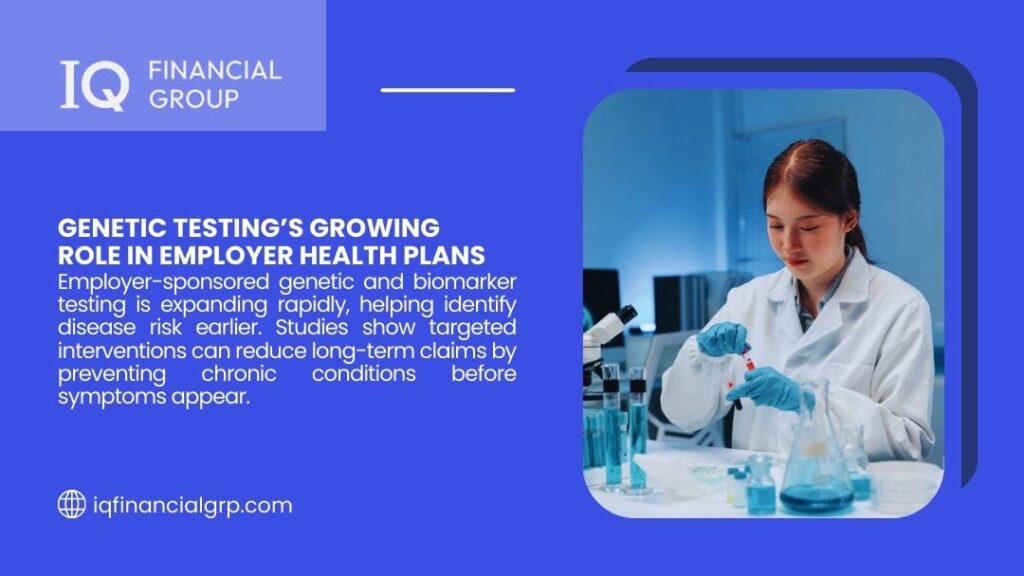
Biomarker Testing and Clinical Personalization: Personalized healthcare solutions for employers utilize advanced diagnostics to check biological age and metabolic health. These insights allow physicians to move beyond generalized care and design targeted treatment strategies similar to advanced personalized medicine programs, such as biomarker-based wellness analysis models that focus on root-cause health optimization.
Concierge-Style Virtual Care and Care Navigation: Concierge platforms act as a central hub where employees can access doctors, mental health specialists, and medical advocates. This high-touch service helps employees navigate their benefits without the usual frustration while supporting preventative treatment follow-up, medication coordination, and health advocacy services similar to concierge virtual care programs offered through employer personalized medicine platforms. Often, these programs are paired with affordable group health insurance options to provide a comprehensive safety net.
What Employees Experience Inside AI-Enhanced Health Plans
For these initiatives to work, employees have to actually use them. Most journeys begin with a simple wellness screening or a preventative assessment. AI then analyzes that data to offer personalized recommendations and individualized preventative health action plans.
The results are tangible. According to studies, firms that lean into workplace wellness and preventative care often see productivity boosts of over 20-25%. Success is measured not just in dollars, but in reduced absenteeism, improved chronic disease management, and stronger employee engagement within personalized medicine-driven employer health strategies.
Worker Benefit Chatbots: Helpful, But Not a Total Solution
You’ve likely seen the rise of worker benefit chatbots. These are excellent for explaining enrollment windows or deductible rules, reducing the HR department’s administrative load. However, it’s important to distinguish between communication and care. While chatbots are great for literacy, they aren’t clinical platforms. The real heavy lifting is done by physician oversight and biomarker testing.
Data Privacy, HIPAA Compliance, and Responsible AI
Handing over health data to an AI system naturally raises red flags regarding privacy. Employers must be diligent in ensuring vendors adhere to strict HIPAA standards and encryption protocols.
Vendor Governance Evaluation Framework
| Evaluation Category | Key Employer Questions |
| Data Security | Is the data encrypted at rest and in transit? |
| Clinical Oversight | Are real doctors making the final call? |
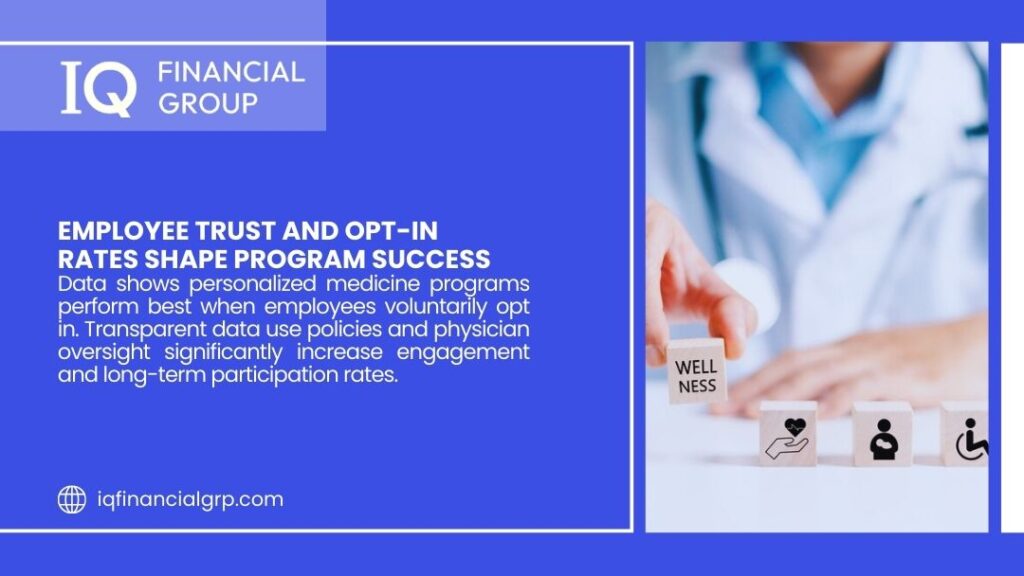
| Consent Standards | Do employees opt-in and control their data? |
| Transparency | Is the AI’s “logic” explainable to users? |
| Compliance | Does it meet all current HIPAA regulations? |
Implementation Strategies for Employers
Most companies don’t overhaul their entire plan overnight. Instead, they start with pilot programs focused on high-risk segments of their workforce. This process typically requires collaboration between HR leadership, medical vendors, and benefits advisors to ensure preventative medicine programs integrate with existing employer-sponsored coverage structures.
Integrating Personalized Medicine With Existing Coverage
Think of personalized medicine as an upgrade, rather than a replacement. It operates alongside your standard insurance to fill the gaps in preventative care. Many businesses find it helpful to first educate themselves on what health insurance typically covers so they can see exactly where AI-driven personalization adds the most value.
Evaluating ROI of Personalized Medicine Programs
How do you know if it’s working? Employers generally look at five key indicators:
| ROI Measurement | Business Impact |
| Claims Cost Reduction | Lower emergency and hospitalization costs |
| Employee Retention | Increased job satisfaction and loyalty |
| Absenteeism Reduction | Fewer missed workdays |
| Productivity Growth | Higher workforce efficiency |
| Preventative Care Participation | Early disease detection and management |
Why Employers Are Paying Attention to Preventative Benefit Strategies
Healthcare costs continue to increase, and businesses seek smarter ways to support employee health without sacrificing financial stability. AI and personalized medicine in employee health plans allow employers to move beyond reactive healthcare spending toward preventative workforce health management.
Employers gain access to data analytics, concierge care services, and clinical personalization programs that support improved health outcomes and stronger productivity levels.
Organizations exploring preventative workforce healthcare strategies benefit from consulting experienced advisors who understand market trends, employer compliance requirements, and benefit integration strategies. Businesses that evaluate personalized medicine programs early often position themselves ahead of competitors in talent recruitment and retention.
